The Climate Biennial confirms eight exhibition spaces for its first edition
Map of the zones of interest in Avilés, 2024. Image: Elisa Cuesta
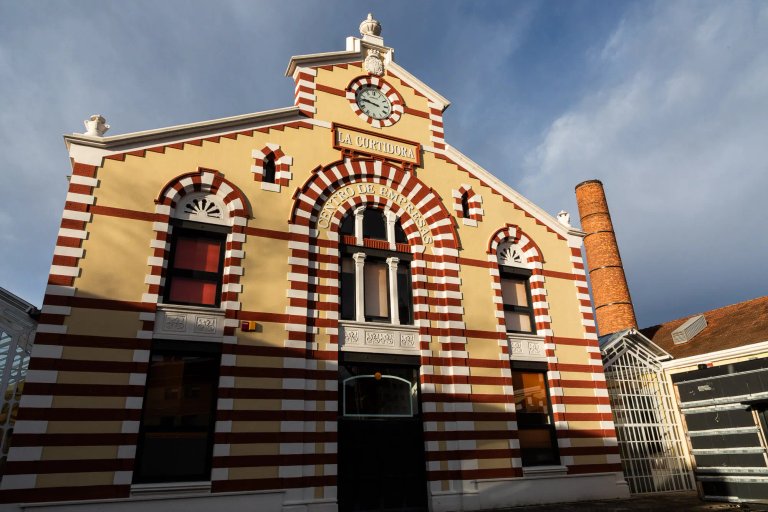
The Climate Biennial: Art, Industry, and Territory announces the first confirmed venues of the exhibition program. Emblematic spaces from the historical, industrial, and cultural heritage of Avilés and its surroundings have been selected, including the Former Municipal Fish Market (La Grapa), the Centro Niemeyer, the School of Arts and Crafts, the Avilés Cultural Factory, La Curtidora, La Noria, the Palacio de Camposagrado (ESAPA), and the Palacio de Valdecarzana.
Centro Niemeyer will present an exhibition program during the celebration of the Climate Biennial that will propose a profound and multidisciplinary reflection on climate change through works by leading international artists. The exhibitions will invite audiences to rethink the relationship between human beings and their environment, offering a vision of nature in contemporary art and highlighting the transformations caused by human action as seen through the eyes of creators. Likewise, the exhibitions will foster a critical debate on the exploitation, management, and preservation of the natural environment in which humanity is embedded, underscoring the urgency of moving toward more sustainable and responsible models.
The public program will take place in several key venues such as the Municipal House of Culture and Ferrera Park.
First confirmed venues of the Exhibition Program.
Cartographic collage of Avilés. Elisa Cuesta, 2024
Former Municipal Fish Market of Avilés (La Grapa)
The Former Municipal Fish Market of Avilés was inaugurated in 1918 beside the estuary, originally conceived as a marketplace for the trade of fresh fish, closely connected to port activity and the everyday life of the city. Its strategic location and commercial function made it a key hub for exchange and supply throughout much of the 20th century, forming part of the urban fabric linked to maritime labor and the local economy. Over time, the building ceased to serve its original purpose and was converted into a cultural space, integrated into the surroundings of the La Grapa footbridge and in direct dialogue with the Centro Cultural Niemeyer. Today, the building hosts exhibitions and cultural activities and houses the city’s new tourist information point, reinforcing its role as a space of transit and welcome for both residents and visitors, while preserving its historical and urban value.
The public program will take place in several key venues such as the Municipal House of Culture and Ferrera Park.
Centro Niemeyer
The Centro Niemeyer is an open gateway to all arts and cultural expressions. Music, film, theatre, dance, exhibitions, and the spoken word take center stage in a multidisciplinary cultural program designed to reach all audiences. Inaugurated in 2011, it is the only work in Spain by the brilliant Brazilian architect Oscar Niemeyer. Throughout the year, its spaces host cultural activities and conferences, and visitors can explore its history in detail through guided tours. The Centro Niemeyer is one of Asturias’s leading cultural landmarks and tourist attractions, as well as a symbol of the transformation of Avilés.
Cartographic collage of Avilés. Elisa Cuesta, 2024
Cartographic collage of Avilés. Elisa Cuesta, 2024

Cartographic collage of Avilés. Elisa Cuesta, 2024
School of Arts and Crafts
The School of Arts and Crafts of Avilés has a history spanning over 148 years and was established thanks to the initiative of the indianos, who promoted the creation of an institution aimed at training foremen and skilled workers, facilitating access to employment and contributing to the city’s industrial and social development. From its inception, the school combined technical education with vocational training and also included education for women in areas such as domestic tasks and textile work. It was additionally the first master school for industrial instructors in Avilés.
Throughout its history, the building has served many different functions, reflecting the social and political changes of the times: it became the Apprentice School of ENSIDESA, operated as a secondary school, and was even used as a prison during the Spanish Civil War. It endured two fires over the years, although its historic façade has been preserved as a testimony to the building’s educational and industrial past. Among the trades and disciplines taught were wood carving, saddlery, weaving, painting, and watercolor.
It is also worth noting the connection with the artist Maruja Mallo, a prominent figure in the Spanish avant-garde, who was associated with the school and taught classes there. Today, the School of Arts and Crafts operates under the Patronage of the School of Arts and Crafts, maintaining its educational mission and its role as an active cultural space in the city.
Avilés Cultural Factory
The Camino Garment Factory was one of the most important textile industries in Avilés during the 20th century. Founded in 1946 by Segundo Camino Piedra and designed by the architect Tomás Menéndez Abascal, the complex consisted of two large industrial halls of approximately 10 × 40 meters and an adjoining building housing offices, a dining hall, and changing rooms. The factory was a significant example of the city’s industrial development in the postwar period and of the role of the textile industry in shaping Avilés’s urban and social fabric. After industrial activity ceased, the building underwent a rehabilitation process beginning in 2007, culminating in 2010 with its reopening as the Avilés Cultural Factory. Today, the space operates as a leading multidisciplinary artistic and cultural center, hosting creative workshops, rehearsal rooms, a performance hall, a FabLab, and the Municipal School of Ceramics, establishing itself as an active hub for cultural production and artistic training in the city.