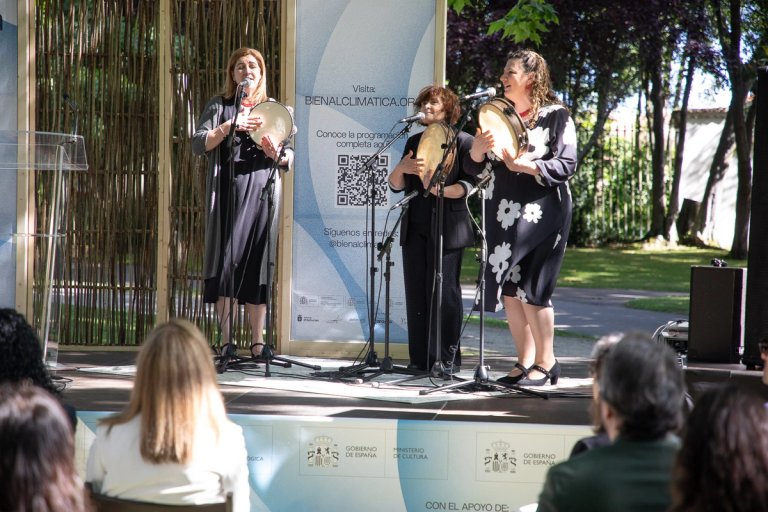
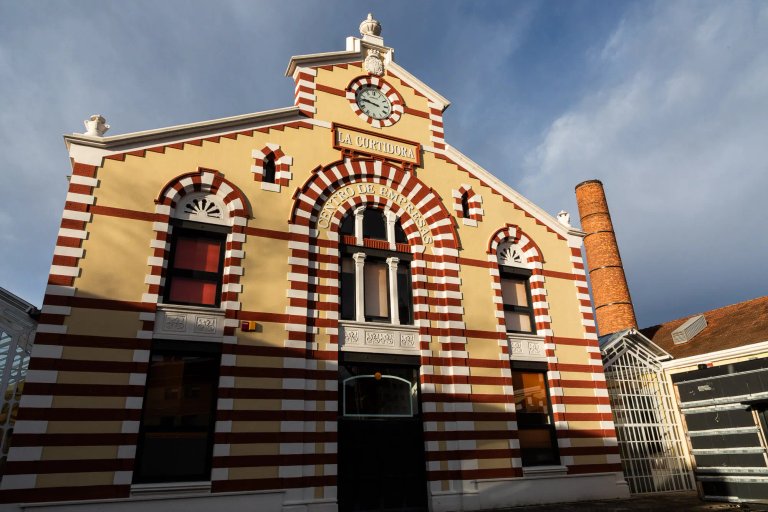
The Climate Biennial reaches the halfway point of its first edition with a programme that has already brought together thousands of participants.
The Climate Biennial has reached the halfway point of its first edition,
establishing itself as one of the major cultural events of the summer in
Asturias. Since its opening last June, over 4,500 people have taken part
in the public programme’s activities: guided tours, talks, workshops,
performances, openings and gatherings – a figure that reflects the
interest generated by an initiative that places art, culture and dialogue at
the heart of the debate on the ecological transition.
This participation is matched by the reach of a project conceived as a
biennial spread across the whole city. With thirteen exhibition spaces
open for over a hundred days, interventions in public spaces and a
programme running throughout the summer, the organisers estimate
that the Biennial will have reached a cumulative total of around 90,000
people by the time it ends. This estimate is based on the duration of the
event, the distribution of the programme across different venues and the
open nature of many of the activities – factors which broaden the
Biennial’s potential reach.
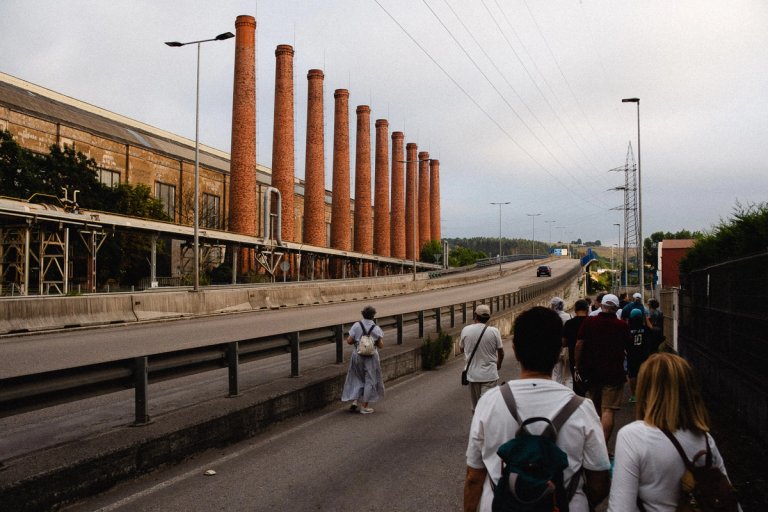
Derivas de la Cartografía Crítica: Patrimonio industrial | Gigantes de acero Bienal Climática 2026 - ©Nico Rodríguez-3.jpg
August: the perfect time to discover the Climate
Biennial
Throughout August and until 20 September, the Climate Biennial invites
residents and visitors to explore its thirteen exhibition spaces, spread
across various locations in Avilés, and discover a project that offers new
perspectives on the relationship between art, industry, territory and
ecological transition.
Featuring more than forty national and international artists, the Biennial
has so far presented a multidisciplinary programme comprising
exhibitions, itineraries across the territory, civic labs, workshops,
screenings, performing arts, guided tours and forums for dialogue that
invite reflection on issues such as industrial heritage, biodiversity, livin
heritage, the transformation of cities and the challenges of the ecological
transition. The programme has also featured contributions from leading
figures from the scientific, cultural and artistic worlds, such as the
ecologist and climate change expert Fernando Valladares, who spoke at
the opening ceremony. Among the activities with the highest turnout, the
guided tour led by naturalist David Alonso also stood out, bringing
together nearly 300 people on a walk to explore the urban landscape of
Avilés.
The Critical Cartography Drift Walks, the exhibition There is Oil Here!,
the Eco-Fictions Laboratory, the Civic Laboratory, the film cycle Youth
Behind the Camera, the film Fever, as well as family activities and tours
of Asturias’ natural and cultural heritage, have transformed Avilés into a
space for cultural experimentation where disciplines and communities
engage in dialogue to imagine new ways of inhabiting the territory.
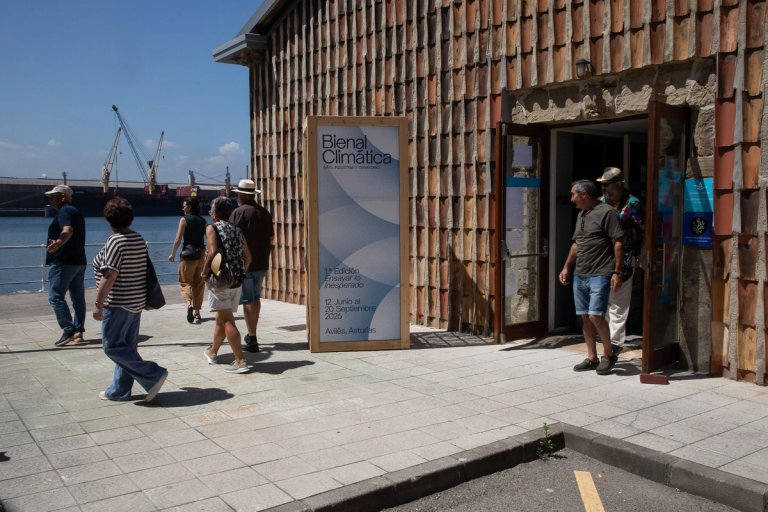
Derivas de la Cartografía Crítica: El estuario de Avilés Bienal Climática 2026 - ©Nico Rodríguez.jpg
Conversation as a starting point for the ecological
transition
One of the highlights of recent weeks took place during the Celsius 232
festival, featuring Juliet Marillier, Sofía Rhei and the American writer
Becky Chambers, one of the most influential voices in contemporary
science fiction.
During the meeting, she argued that tackling the climate crisis requires
much more than technological solutions or individual actions. The
ecological transition, she said, requires structural changes, new forms of
cooperation and the use of technology for the common good. She also
emphasised the role of culture, literature and imagination in shaping
possible futures, noting that listening to different perspectives, accepting
disagreement and strengthening communities are essential prerequisites
for tackling the major challenges of the present.
These ideas are fully in line with the Climate Biennial’s purpose: to create
spaces where people, disciplines and institutions can come together to
formulate shared questions rather than single answers.
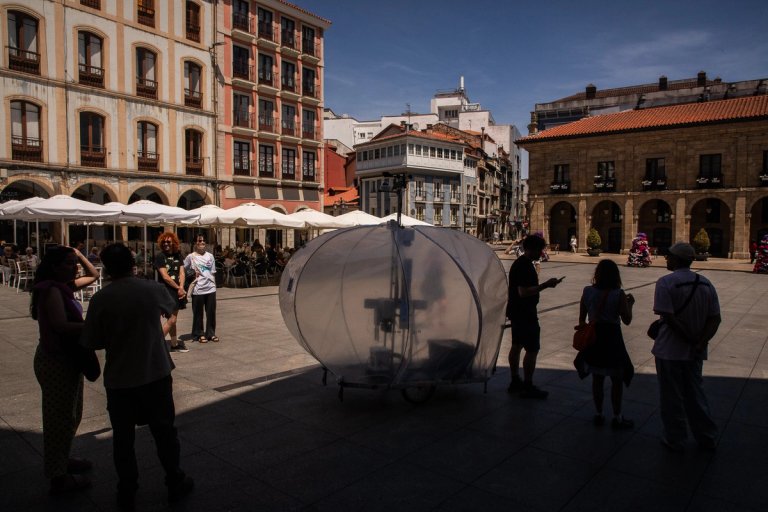
Nube móvil de Rotor Studio Bienal Climática 2026 - ©Nico Rodríguez.jpg
A Biennial committed to continuous improvement
The Climate Biennial views sustainability as a process of continuous
improvement. It has therefore introduced measures to reduce the
environmental impact of its organisation and operations, such as reusing
exhibition materials, optimising resources, collaborating with local
suppliers and designing a decentralised programme that encourages
visitors to walk between the different venues. Rather than presenting
ready-made solutions, the Biennial seeks to prove that the ecological transition also involves re-examining the ways in which culture is
produced.
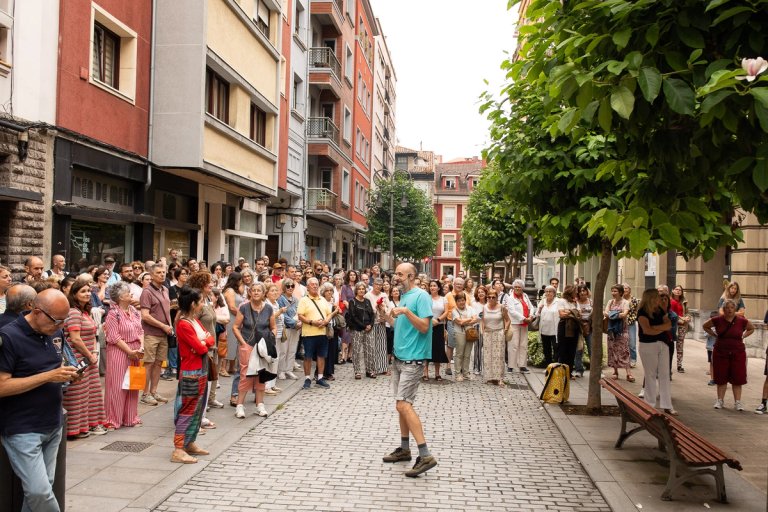
Ruta Avilés con David Alonso Bienal Climática 2026 - ©Nico Rodríguez.jpg
An invitation to explore Avilés
Until 20 September, the Climate Biennial invites you to discover Avilés
from a new perspective. Its exhibitions, interventions and activities invite
visitors to tour the city, pause at its heritage and industrial sites, and take
part in discussions that link art, territory, memory, industry and the future.
Because the Climate Biennial is based on a simple conviction: great
transformations don't start with answers, but with conversations.