The Climate Biennial officialy opened today in Avilés
The Climate Biennial officially opened today in Avilés with an institutional ceremony marking the beginning of a programme that, under the motto Rehearsing the Unexpected, will transform the city and its surroundings into a cultural landmark until 20 September.
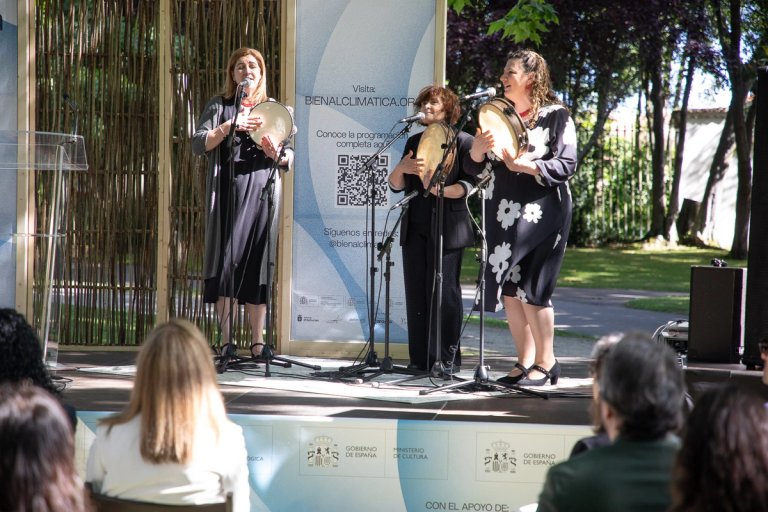
Inauguración Bienal Climática_Créditos: Nico Rodríguez-1
The official opening took place this morning at Ferrera Park in Avilés and was attended by Ernest Urtasun, Minister of Culture; Miguel González Suela, Undersecretary of the Ministry for Ecological Transition and the Demographic Challenge; Maite Verdú Martínez, Director-General for Urban Agenda and Architecture at the Ministry of Housing and Urban Agenda; Jordi Martí Grau, Secretary of State for Culture; Vanessa Gutiérrez, Regional Minister for Culture, Language Policy and Sport of the Principality of Asturias; and Mariví Monteserín, Mayor of Avilés. Also in attendance were Miguel Soberón, Director of Atelier itd, Miguel Soberón and Amanda Masha Caminals, Artistic Director of the Climate Biennial.
During their speeches, institutional representatives highlighted the capacity of culture to create spaces for dialogue, exchange and innovation in response to contemporary climate challenges, as well as the role of Avilés and Asturias as key territories for reflecting on the industrial, social and environmental transformations of the present.
Until 20 September, the Biennial will bring together more than 40 national and international artists and collectives in a programme that interweaves contemporary art, critical thinking, civic participation, memory and innovation to reflect on the major ecological, social and cultural challenges of our time.
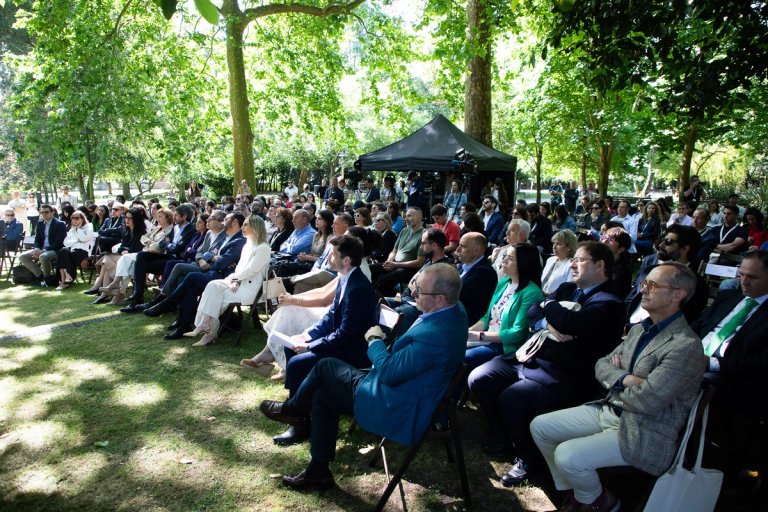
Inauguración Bienal Climática_Créditos: Nico Rodríguez-2
More than 40 artists to rehearse possible futures
The artistic programme of the Climate Biennial, curated by Amanda Masha Caminals, is structured around three thematic strands: Weather Station, dedicated to new ways of observing and communicating atmospheric phenomena; Present Industries, focused on the imaginaries of industrial and energy transition; and Grief and Joy, which explores the emotional, social and cultural dimensions of contemporary transformations. The Biennial brings together more than 40 national and international artists and collectives, including Lawrence Abu Hamdan, Gabriela Bettini, Carolina Caycedo, Agnes Essonti, Naiza Khan, Otobong Nkanga and Amanda Piña. It also incorporates cultural mediation and community-based projects developed in collaboration with local organisations through the En Colectivo initiative.
The programme combines historical works, institutional loans, works in progress and new productions commissioned specifically for this edition. In total, the Biennial supports 14 new productions. Among its highlights are a selection from the State Collection of Art and Climate, promoted by the Ministry for Ecological Transition and the Demographic Challenge and the Ministry of Culture, as well as the ACTS Residency Programme (Art, Science, Technology and Society), developed in collaboration with institutions such as AEMET, CIUDEN and Avilés Cultural Factory to foster new forms of research and creation around ecological transition.
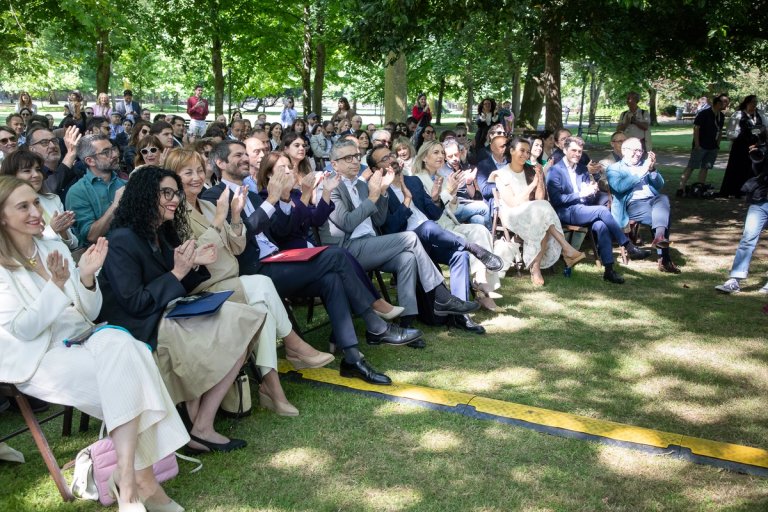
Inauguración Bienal Climática_Créditos: Nico Rodríguez-3
Thirteen venues to explore the city through art, industry and territory
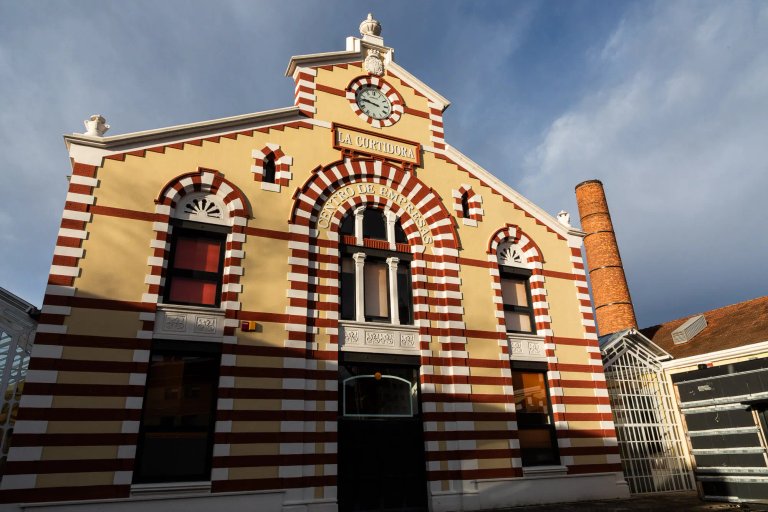
The Climate Biennial will unfold across 13 venues throughout Avilés and its surrounding area, creating a route that connects historical heritage, industrial memory, cultural facilities and public spaces. The programme will take place in emblematic locations such as Camposagrado Palace, Valdecarzana Palace, La Grapa, La Curtidora, the Niemeyer Center, the ArcelorMittal University Campus of Spain, the Municipal Centre for Art and Exhibitions (CMAE), La Luz Library, Avilés Cultural Factory and La Noria, among others. Together, these venues transform the city into an expanded cultural laboratory where contemporary art, industry, territory and citizens engage in dialogue to imagine new ways of addressing present and future challenges.
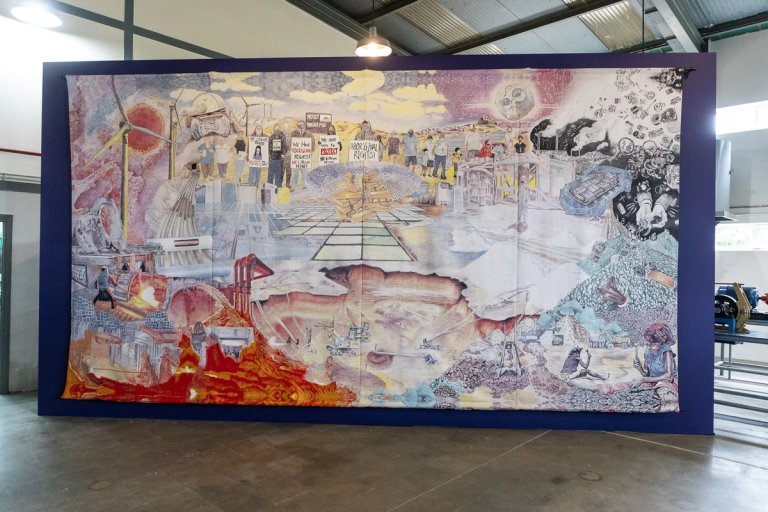
Inauguración Bienal Climática_Créditos: Nico Rodríguez-6
A public programme of more than 60 activities connecting art, industry and territory with citizens
The Climate Biennial is complemented by an extensive public programme of more than 60 activities, led by Atelier itd and the Association El Día Después. The programme includes routes through industrial and natural landscapes, participatory workshops, public debates, installations, performances and projects connecting art, science, ecology and civic engagement. Highlights include the Critical Cartography Drifts, routes exploring Avilés' industrial memory and urban transformations; artistic interventions such as The Banquet of the Maidens by Agnes Essonti, Florecimiento by Amanda Piña, and Mobile Cloud by Rotor Studio; as well as a series of civic laboratories designed to collectively imagine future energy, social and environmental scenarios. The programme also pays particular attention to Asturian heritage, popular culture and local knowledge through activities linked to rural memory, traditional architecture, oral traditions and community practices.
This is complemented by Common Architectures, a research strand exploring how public facilities such as libraries, parks and civic centres can become spaces for coexistence, learning and adaptation in response to socio-ecological challenges, through projects such as Bibliokepos, developed at La Luz Library in collaboration with local communities and stakeholders.
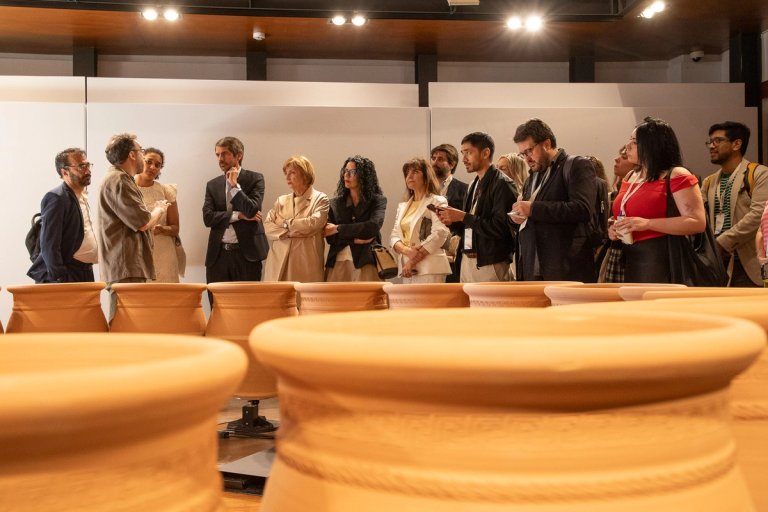
Inauguración Bienal Climática_Créditos: Nico Rodríguez-13
A network of exhibitions and projects expanding the dialogue
The Climate Biennial extends its reach through collaborations with institutions and cultural organisations developing exhibitions and projects aligned with its socio-ecological concerns. Associated initiatives include the exhibition There Is Oil Here!, promoted by the Biodiversity Foundation and the Círculo de Bellas Artes; touring exhibitions promoted by the Ministry of Housing and Urban Agenda; What Darwin Missed by Joan Fontcuberta, Water by Edward Burtynsky and Living Natures at the Niemeyer Center; as well as the arrival in Avilés of the 17th Spanish Biennial of Architecture and Urbanism (BEAU), which reflects on the flows of materials, energy, people, data and the environment that shape contemporary society.
The Climate Biennial: Art, Industry and Territory is promoted by the Ministry for Ecological Transition and the Demographic Challenge, the Ministry of Culture, the Ministry of Housing and Urban Agenda, the Principality of Asturias, Avilés City Council and Atelier itd Foundation. It is also supported by the Daniel and Nina Carasso Foundation and the Community Arts Lab by Porticus.